
About All Tours And Moraine Lake ToursFrom Banff ToursSunrise ToursFrom Calgary ToursFrom Canmore Tours Directions Hours & Fees
Find Tours 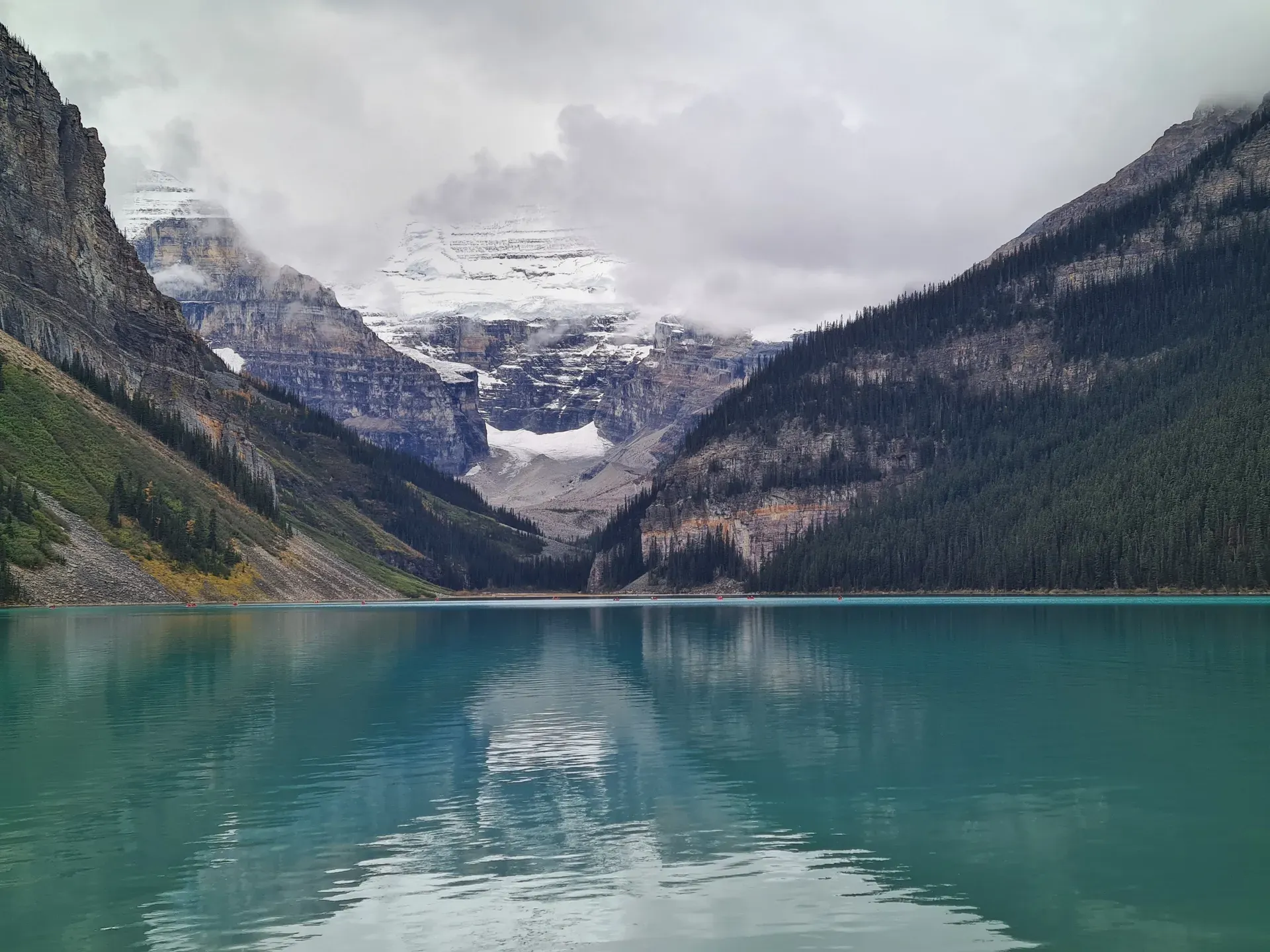
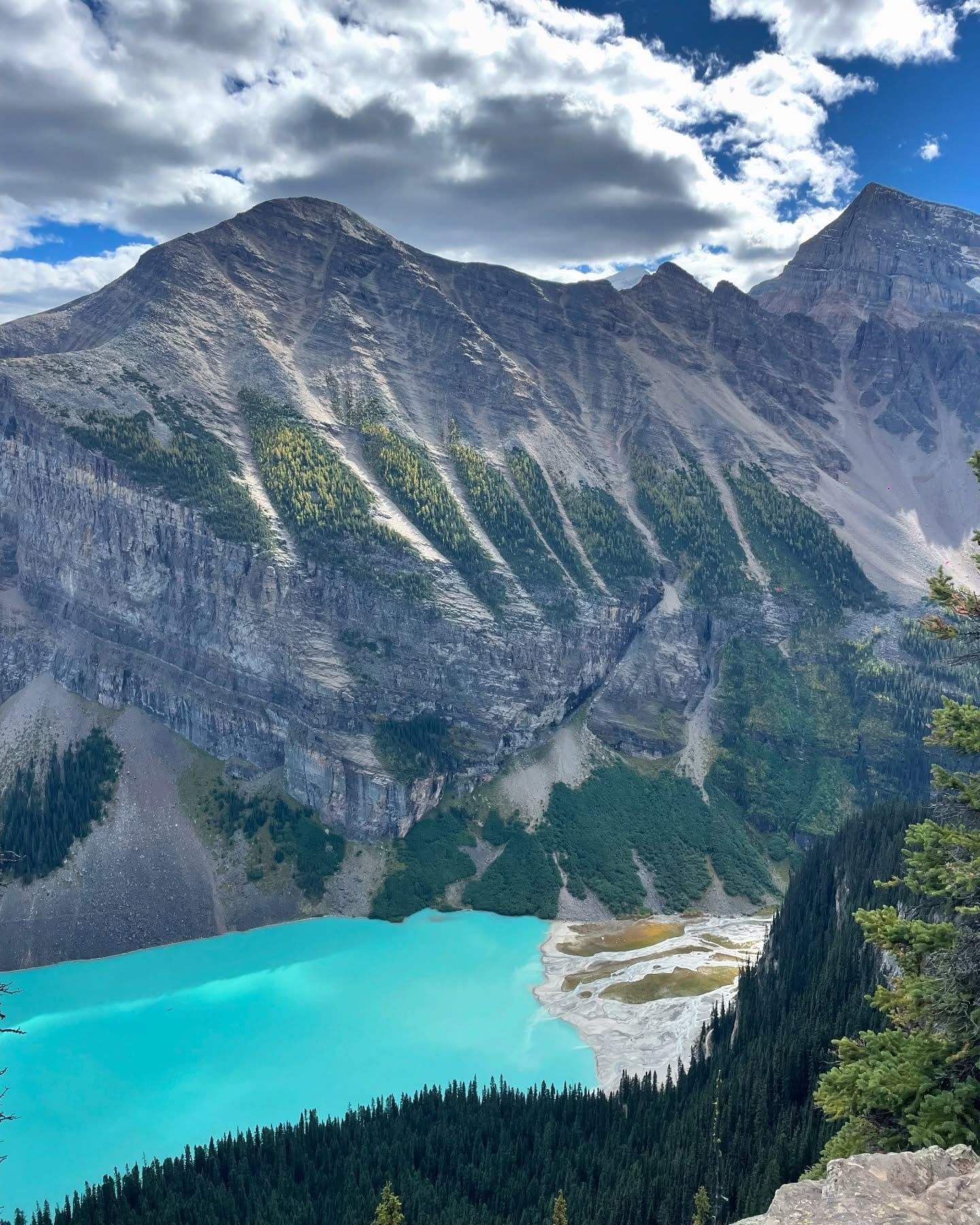
Glacial rock flour turns the 2.4-kilometer waters of Lake Louise a sharp turquoise. The 1,731-meter-high basin sits below the Victoria Glacier in Banff National Park, drawing millions of visitors to its icy shores.
Glacial meltwater from six surrounding glaciers feeds Lake Louise, filling a 2.4-kilometer basin in southwestern Alberta. The water holds fine rock silt, known as rock flour, created by the grinding of ice against limestone bedrock. Sunlight hits these suspended particles, absorbing red and yellow spectrums while reflecting blue and green, turning the lake a sharp turquoise. At 1,731 meters above sea level, the lake sits 62 kilometers northwest of the Banff townsite in Canada's first national park. The Fairmont Chateau Lake Louise dominates the eastern shore, presenting a massive concrete facade against the wilderness. Massive peaks frame the water on three sides, culminating in the 3-kilometer-long lower Victoria Glacier at the far western edge.
Visitors walk the flat, paved 2-kilometer Shoreline Trail to hear glacial creeks rushing into the lake's far end. Bright red canoes launch from the historic boathouse on the left shore, cutting through water that rarely rises above 4 degrees Celsius. The cold presents a severe hypothermia risk. Swimming is entirely unfeasible. High traffic volumes mean the $42 CAD Lakeshore parking lot routinely fills before 7:00 am in July and August. Parks Canada turns hundreds of vehicles away daily, forcing late arrivals to rely on the Route 8X Express bus from Banff or the Park and Ride shuttle from the ski resort 5 kilometers down the mountain.
Weather dictates the physical experience of the landscape. July and August bring warm temperatures, peaking around 20 degrees Celsius, and fully accessible trails. November and May deliver transitional storms, muddy paths, and lingering avalanche hazards on high-alpine routes. The lake freezes solid in winter, burying the turquoise water under feet of ice and snow. A professionally cleared outdoor skating rink replaces the canoes, flanked by a hand-carved ice castle. Hikers heading up the 6.8-kilometer trail to the Lake Agnes Teahouse or the 10.6-kilometer Plain of Six Glaciers route must check the official Parks Canada trail conditions report that morning. Active grizzly bear sightings, sudden snowfalls, or late-season avalanche risks frequently close these paths without warning. Bring quick-drying layers and a waterproof jacket, as mountain weather shifts from intense sun to freezing rain within an hour.
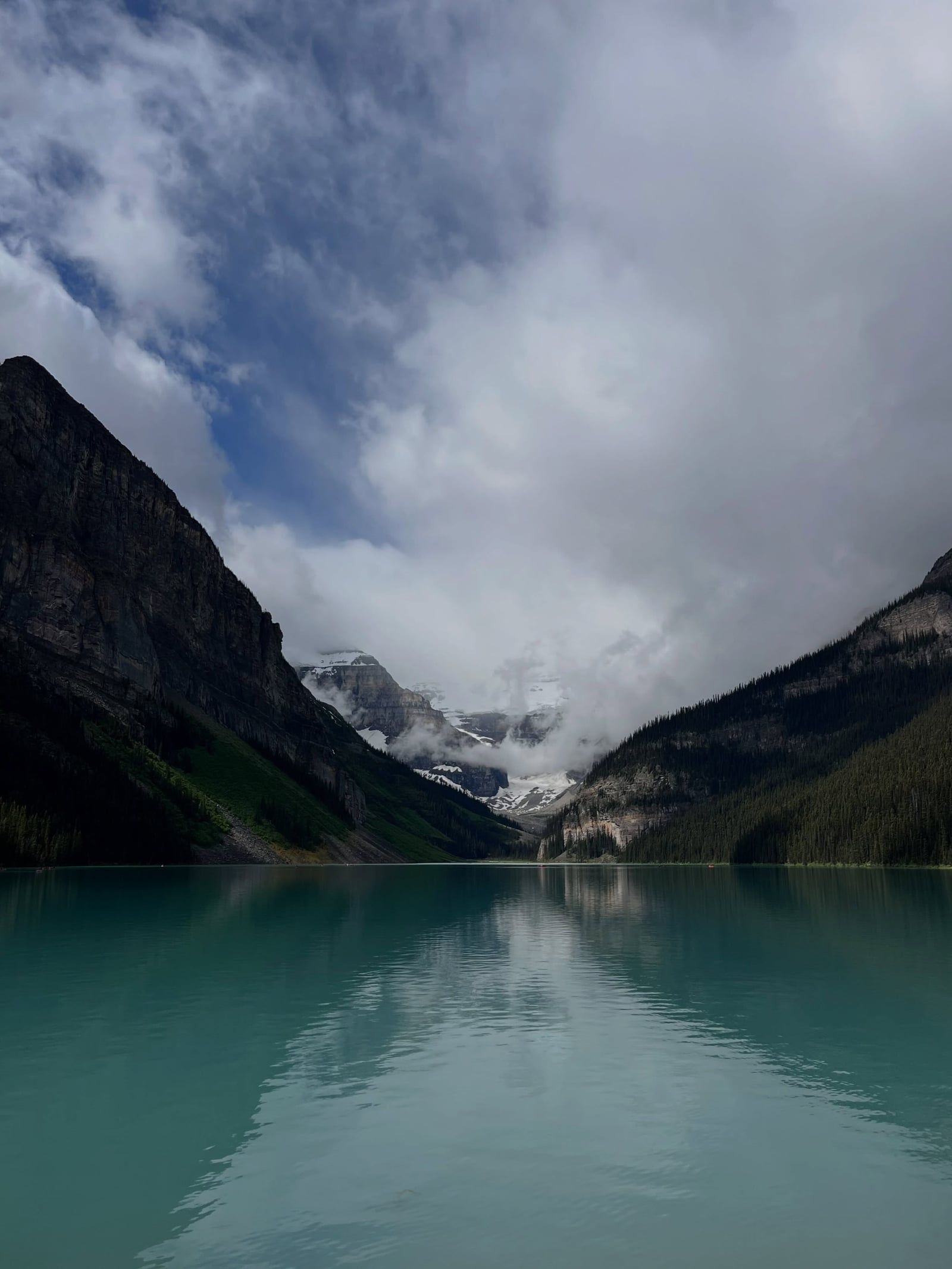
The Stoney-Nakoda people originally named the water Ho-run-num-nay, translating to the Lake of Little Fishes. They hunted, fished, and camped in the Bow Valley for generations before European expansion reached the eastern slopes of the Rocky Mountains. Canadian Pacific Railway workman Tom Wilson arrived in 1882, guided to the water by Stoney-Nakoda members. He named the basin Emerald Lake upon seeing the distinct color. Two years later, the Geographic Board of Canada officially changed the name to Lake Louise. The new title honored Princess Louise Caroline Alberta, the fourth daughter of Queen Victoria and wife of the Governor General of Canada.
The Canadian Pacific Railway established a construction outpost near the water in 1884 to support their transcontinental rail line pushing through the mountains. Railway executives quickly recognized the commercial potential of the alpine scenery. They built a modest two-bedroom log cabin on the eastern shore in 1886. This structure housed outdoor enthusiasts and mountaineers drawn to the challenging peaks of the continental divide. Fire destroyed early iterations of the guest house, prompting the railway to rebuild with fireproof concrete and brick. The cabin eventually expanded into the Fairmont Chateau Lake Louise, a massive luxury resort that now defines the lake's primary viewpoint and accommodates thousands of guests annually.
Swiss mountain guides arrived in 1899, hired by the railway to lead tourists safely up the surrounding summits. These guides shaped the local infrastructure over the next fifty years. They built the Plain of Six Glaciers tea house out of local stone and established climbing routes that remain active today. The 1905 construction of the Lake Agnes Teahouse further cemented the area as a hub for alpine recreation.
Traffic to the lake surged as automobile travel replaced train journeys in the mid-20th century. The completion of the Trans-Canada Highway connected Calgary directly to the Bow Valley, drastically reducing travel time. Between 2010 and 2019, vehicle traffic on Lake Louise Drive increased by 70%. Banff National Park now receives 4.2 million annual visitors, heavily concentrating at this single lakeshore. Parks Canada responded by implementing mandatory paid parking, closing the nearby Moraine Lake Road to personal vehicles, and launching a massive shuttle operation from the ski resort to manage the daily influx. Visitors must now book shuttle tickets months in advance to guarantee access during the peak summer season.
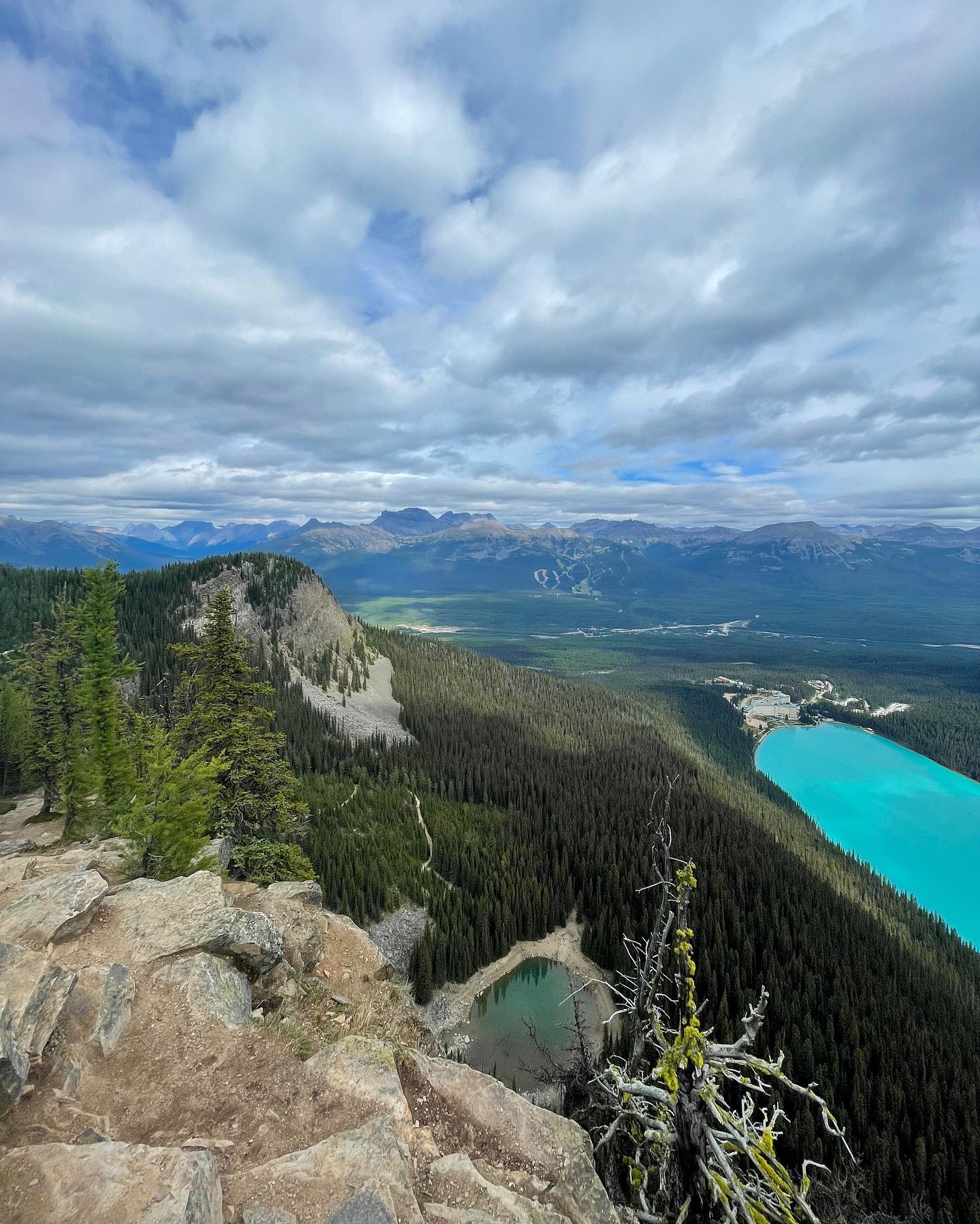
Six glaciers feed directly into the Lake Louise basin. The 3-kilometer-long lower Victoria Glacier dominates the western skyline, hanging heavily above the valley floor. Ice movement grinds the underlying limestone and quartzite bedrock into a fine powder. Spring meltwater carries this rock flour down the steep mountain channels and deposits it into the 2.4-kilometer-long lake. The particles remain suspended in the water column rather than sinking to the bottom. Sunlight enters the water, absorbs the red and yellow spectrums, and reflects off the rock flour to produce a sharp turquoise hue. The color peaks in intensity during July and August when glacial melting reaches its maximum rate.
The lake sits at an elevation of 1,731 meters, placing it among the highest large lakes in the Canadian Rockies. The surrounding hamlet rests slightly lower at 1,540 to 1,600 meters. Steep limestone cliffs rise sharply from the water's edge on the northern and southern shores. Rock climbers scale these vertical faces, utilizing natural fissures and established bolt routes. The 2-kilometer Shoreline Trail cuts through subalpine forest along the northern edge, offering a flat, paved surface that accommodates wheelchairs and strollers.
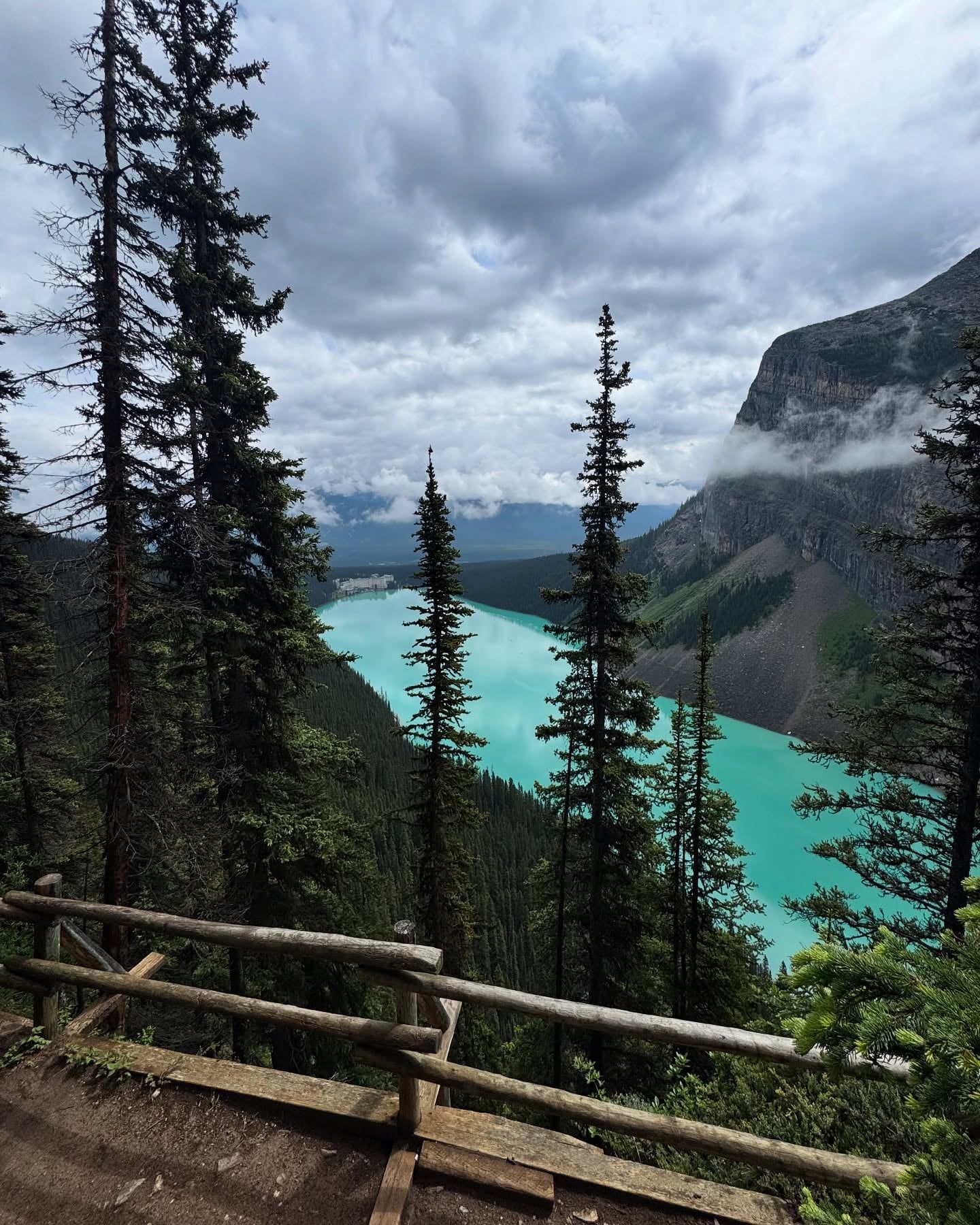
High-alpine terrain surrounds the immediate basin, characterized by dense spruce and fir forests that thin out into rocky scree slopes. The 6.8-kilometer roundtrip trail to Lake Agnes climbs 400 meters in elevation, passing a smaller subalpine lake before breaking the tree line. The 10.6-kilometer Plain of Six Glaciers route pushes deeper into the U-shaped glacial valley. Hikers on this path feel the temperature drop as they approach the ice fields. The wind carries the distinct rumble of shifting ice and frequent rockfalls from the Victoria Glacier.
Winter alters the physical landscape entirely. The lake freezes to a depth capable of supporting heavy machinery. Parks Canada and resort staff clear a large section of the ice near the Chateau to create an outdoor skating rink. Snow accumulates heavily on the surrounding peaks, creating severe avalanche conditions. The trails to Lake Agnes and the Plain of Six Glaciers cross active avalanche paths. Travel on these routes from November to June requires formal avalanche training, a transceiver, a probe, and a shovel. Check the daily avalanche bulletin before leaving the paved lakeshore.
The Stoney-Nakoda First Nation holds deep historical ties to the Bow Valley and the lake they call Ho-run-num-nay. The surrounding mountains provided essential hunting grounds, medicinal plants, and seasonal camps long before the establishment of the national park. Modern conservation efforts in Banff increasingly incorporate Indigenous perspectives, acknowledging the displacement that occurred when the federal government created the park boundaries.
Mountaineering culture defines the modern identity of Lake Louise. The arrival of Swiss guides in 1899 introduced European alpine techniques to North America. These guides established a standard of safety and exploration that turned the region into a proving ground for climbers. The stone tea houses at Lake Agnes and the Plain of Six Glaciers stand as physical remnants of this Swiss influence. Operating without electricity or running water, staff hike fresh supplies up the mountain daily and pack out all waste. The tea houses serve fresh tea and homemade pie, maintaining a century-old tradition for backcountry hikers.
The lake functions as the economic and logistical center of Canada's highest community. The hamlet of Lake Louise houses the workers who maintain the trails, operate the ski resort, and manage the massive influx of summer tourists. Federal laws strictly limit commercial development within the park, preventing the hamlet from expanding into a large town like Banff. This restriction preserves the immediate wilderness but creates severe housing shortages for local workers.
Federal regulations heavily protect the local ecosystem, prioritizing animal habitats over human convenience. Gasoline and diesel-powered watercraft are banned on the lake to prevent chemical contamination. Visitors bringing personal kayaks or paddleboards must submit a Self-Certification Permit to prove their equipment is free of aquatic invasive species. Drones are strictly prohibited under the Canada National Parks Act, carrying fines of up to $25,000 CAD. These strict rules maintain the necessary space for grizzly bears, wolves, and elk to navigate the heavily trafficked valley.
The hamlet of Lake Louise sits at an elevation of 1,540 meters, making it the highest permanent settlement in Canada.
Flying a recreational drone anywhere in Banff National Park carries a maximum federal fine of $25,000 CAD.
The Lake Agnes and Plain of Six Glaciers tea houses operate entirely without electricity or running water.
The lake's turquoise color comes from microscopic rock particles reflecting sunlight in the water column.
At the start of each season, helicopters fly heavy supplies like flour and sugar to the backcountry tea houses.
Personal vehicles are permanently banned from driving the nearby Moraine Lake Road year-round to manage extreme traffic congestion.
Federal law requires all visitors to maintain a minimum distance of 100 meters from grizzly and black bears at all times.
Glacial meltwater carries fine rock silt, known as rock flour, into the lake. These microscopic particles stay suspended in the water and reflect sunlight, producing a bright turquoise color. The hue peaks in July and August when glacial melting is highest.
A daily parking fee of $42 CAD applies at the Lakeshore lot between May 15 and October 12. This fee is separate from the mandatory National Park entry pass. The pay-by-plate kiosks only accept credit cards and enforce the fee from 3:00 am to 7:00 pm.
Swimming is highly discouraged due to the extreme risk of hypothermia. The glacier-fed water rarely exceeds 4 degrees Celsius, even in the middle of summer. Visitors should stay on the shore or rent a canoe to experience the water safely.
Yes, non-motorized watercraft are permitted. Visitors must complete a free Self-Certification Permit from Parks Canada before entering the water to prevent the spread of aquatic invasive species. Gasoline and diesel-powered boats are strictly banned.
Parks Canada operates a Lake Connector shuttle between the Lake Louise Lakeshore and Moraine Lake every 30 minutes from June 1 to October 12. Personal vehicles are permanently banned from Moraine Lake Road. Visitors must use the shuttle, Roam Transit, or a commercial tour operator.
The Lake Agnes and Plain of Six Glaciers tea houses typically operate from mid-May until mid-October. They close entirely during the winter and spring. Severe avalanche hazards cover the access trails during the off-season.
The 2-kilometer Shoreline Trail is flat, paved, and highly suitable for wheelchair users and strollers. Accessible parking spaces are available in the Lakeshore lot for a reduced fee of $12.75 CAD for vehicles displaying a valid placard.
Recreational drones are strictly prohibited under the Canada National Parks Act. Operating a drone within park boundaries triggers law enforcement action and carries a maximum fine of $25,000 CAD. Commercial filming requires a specific permit from Parks Canada.
The surrounding wilderness supports grizzly bears, black bears, wolves, cougars, and elk. Hikers must carry bear spray in an accessible holster and know how to use it. Federal law mandates keeping a 100-meter distance from all bears and wolves.
Reservations open on April 15 at 8:00 am MDT on the Parks Canada website, releasing 40% of the season's inventory. The remaining 60% of tickets become available on a rolling 48-hour window at 8:00 am MDT throughout the summer.
Browse verified tours with free cancellation and instant confirmation.
Find Tours